 Selecciona un país ▼
 GuruSoft
 Ecuador
 Colombia
 Bolivia
 Panamá
 R. Dominicana
 Costa Rica
 Paraguay
 Perú
Perú Guatemala
 El Salvador
 España
 Francia
 Angola
Fill out the following form and learn about our Electronic Invoicing services.
Electronic Invoicing is your best ally for
save costs, be more efficient, and stay on top of
the vanguard


ELECTRONIC INVOICING
How does electronic invoicing work?
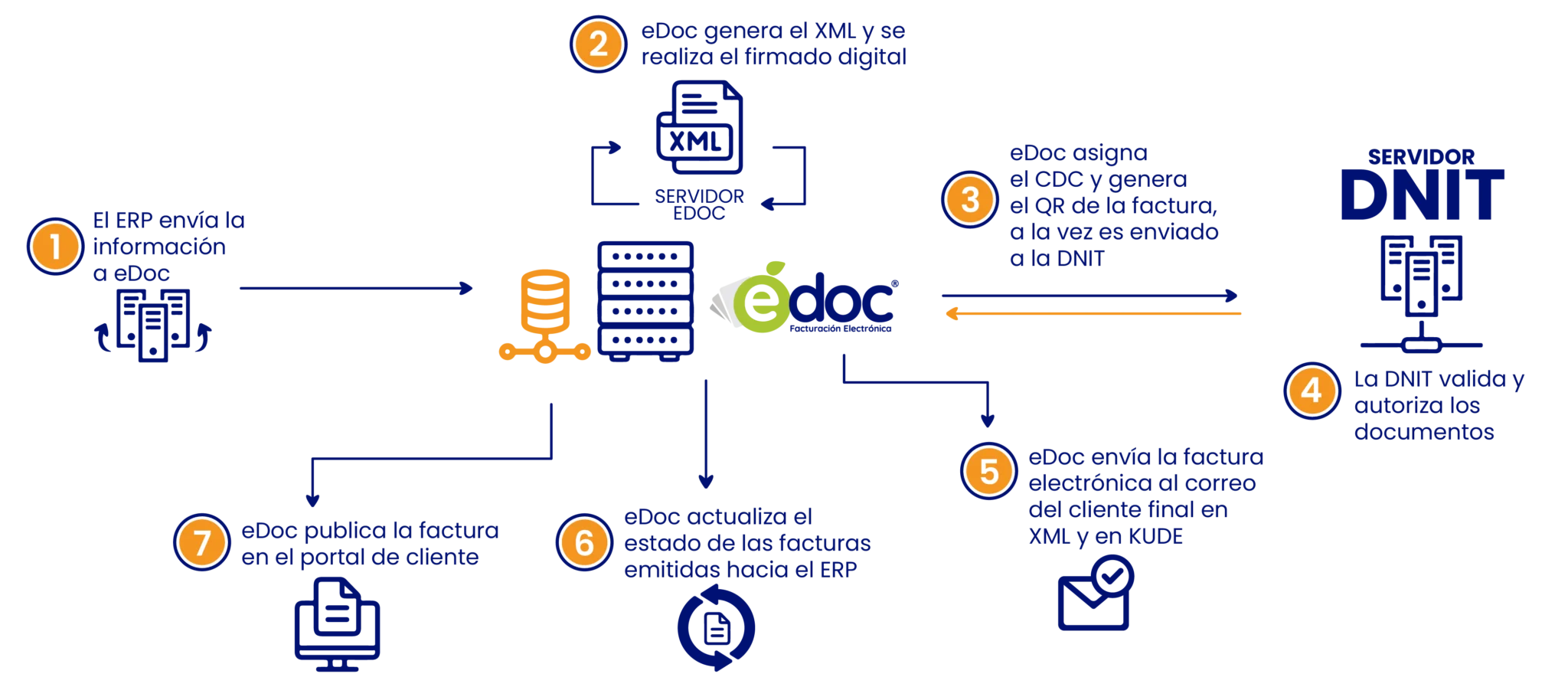
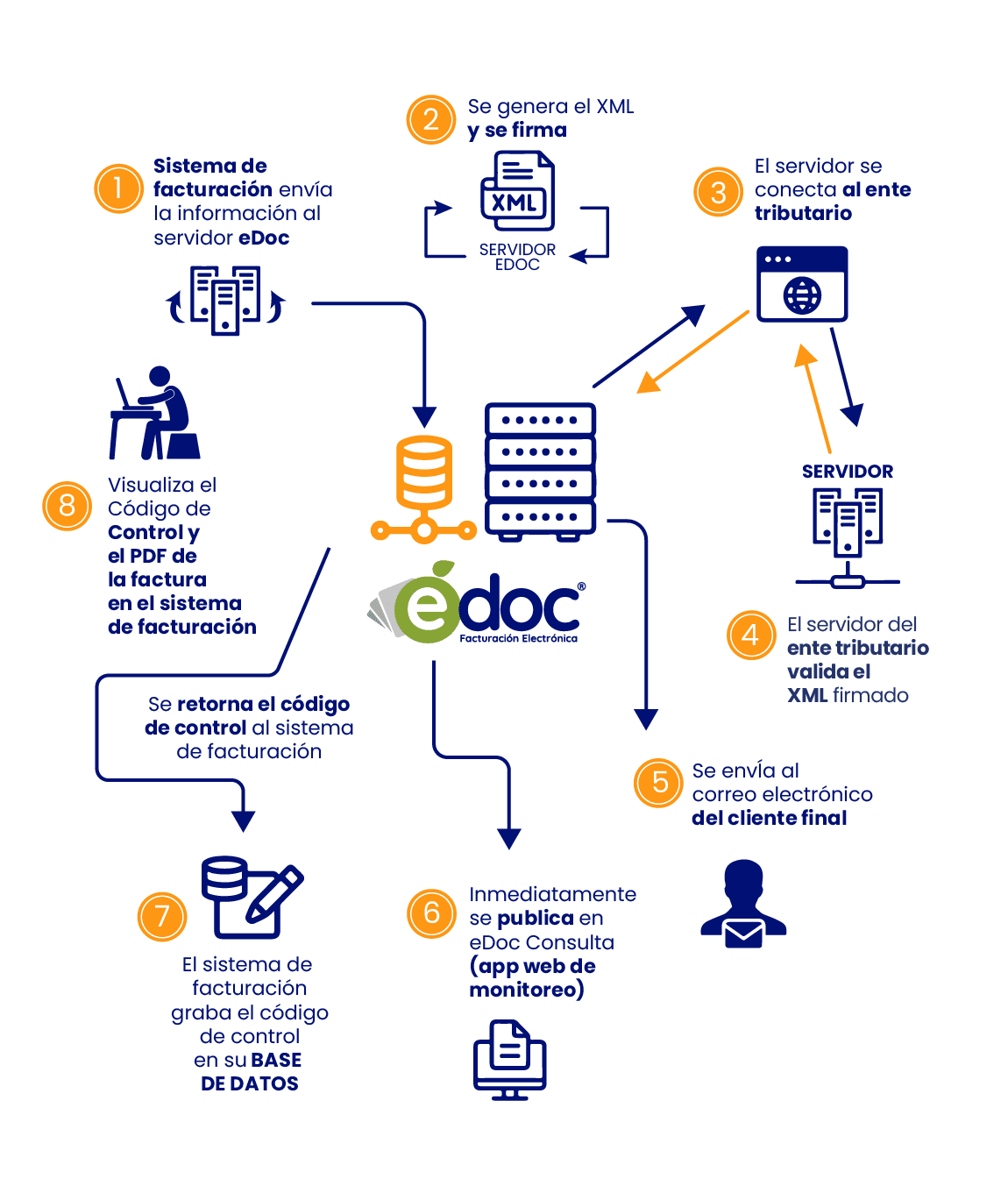
Electronic Tax Documents:
Safeguarding of the XML of the DTEs for a period of up to 5 years
Electronic Invoice (FE)
Electronic Export Invoice
Electronic import invoice
Electronic self-invoicing (AFE)
Electronic Credit Note (ECM)
Electronic debit memo (NDE)
Electronic Referral Note (NRE)
High transactionality and availability of our services
We have a high availability and disaster recocery scheme in our Amazon Web Services private cloud, providing security to our customers, in terms of faster response times and a more stable and robust billing process

Stages of the Electronic Invoicing process in Paraguay
STAGE 1 (2017-2018)
SIFEN Development Pilot Plan
- Pilot Resolution 124
- Start of the development of SIFEN
- e-Kuatia launch into production
STAGE 2 (2019-2020)
Controlled voluntariness
- Start of the voluntary stage
- Designation of new electronic billers
- Opening the test environment
- Issuance of DTE in production
STAGE 3 (2022)
Application and Enabling of Electronic Billers
- Publication of mandatory start dates
STAGE 4 (2023-2024)
Mandatory issuance of DTE
- A new stage of Electronic Invoicing begins, for taxpayers who must start using it in 2023 and 2024
Latest resolutions:
General Resolution No. 74-2020
By which the list of electronic billers enabled for the “Voluntary Adhesion” phase of the Integrated National Electronic Invoicing System – SIFEN is extended
General Resolution No. 74-2020
By which the list of electronic billers enabled for the “Voluntary Adhesion” phase of the Integrated National Electronic Invoicing System – SIFEN is extended
General Resolution No. 73-2020
APPROVING THE ISSUANCE OF ELECTRONIC TAX DOCUMENTS THROUGH THE “EKUATIA’I” SYSTEM AND ESTABLISHING THE START OF A PILOT PLAN.
ANEXO RG N° 57 ACTUALIZACIÓN NÓMINA DE FACTURADORES ELECTRÓNICOS
General Resolution No. 57-2020.pdf
By which the list of electronic billers enabled for the “Voluntary Adhesion” phase of the Integrated National Electronic Invoicing System – SIFEN is updated
Our Solutions
Integration for
SAP Business One
Our eDoc Add-On is an add-on for SAP Business One, which extends the functionality of Electronic Invoicing, adding screens, buttons and validations, which will finally allow electronic documents to be issued and received. All without leaving your ERP!
Integration for
SAP R3, ECC, S/4
Our native integration for SAP R3, ECC or S/4 will allow you to issue and receive electronic documents in an agile and secure way.
The solution consists of a connector, which sends the information from the ERP to the eDoc server, which is hosted in the cloud. It validates the veracity of the information, and then creates the XML, which is signed, assigned code and sent to the SET, for final validation.
Integrations with
Other ERPs or invocing systems
We adapt to any ERP, accounting system, billing system or internal development. Our customers enjoy eDoc on the platforms that are most familiar to them and on which they feel best working to any ERP, accounting system, billing system or internal development.
Integration with
Point of sale
The integration of our software detects the electronic documents that arrive at the ERP, from the point of sale, to send them for authorization. In this way, the process is automated and saves valuable time for the user, who no longer has to manually forward each document to the SET.
Frequently asked questions
The National Integrated Electronic Invoicing System (SIFEN) is the system through which Sales Receipts and Complementary Documents, Withholding Receipts and Remittance Notes are electronically issued, received, validated, approved and consulted; and other documents with a tax impact, which by their nature can be issued electronically (Decree 7795/17).
SIFEN is structured in 2 subsystems (approval and free Electronic Invoicing solution), which group specific functionalities and services aimed at different segments of the universe of SET taxpayers, differentiated in their scope, operational and technological model, transactional volume; as well as in its development and construction, in the execution time horizon.
It is the electronic document transmitted to the SET, validated and approved by SIFEN and that can be used to support the VAT debit and tax credit, as well as the income, costs and expenses in the Income Tax.
Electronic Invoice, Electronic Self-Invoicing, Electronic Credit and Debit Note and Electronic Remittance Note
- They are in XML format.
- They have tax and legal validity.
- They are digitally signed by the issuer.
They are validated and approved by the SET
-
a) Acquire a digital certificate from the authorized Certification Service Providers and containing their RUC, to guarantee the authenticity and integrity of the DTEs issued.
b) Have a computerized billing system that allows the issuance, reception and conservation of DTEs, in accordance with the provisions of the SIFEN Technical Manual.
c) To carry out the testing process in the test environment offered by the SET, in order to guarantee the quality of the information sent and received in the DTEs.
d) Issue a sworn statement indicating that the tests of its IT system have been carried out in accordance with SIFEN’s technical documentation.
e) Request authorization and stamping for the DTEs through the Marangatú System, using their confidential user access code, for which you must be up to date in compliance with tax obligations and have an active RUC.
f) Request the Security Code (CsC) from the SET, through the e-Kuatia portal, for the respective generation of the QR to be printed in the KuDEs associated with the a) Acquire a digital certificate from the authorized Certification Service Providers and containing their RUC, to guarantee the authenticity and integrity of the electronic documents (ED) they issue.
b) Have a computerized invoicing system that allows the issuance, reception and conservation of electronic tax documents (DTE), in accordance with the provisions of the SIFEN Technical Manual.c) Carry out the testing process in the test environment offered for this purpose by the SET, in order to guarantee the quality of the information sent and received in the electronic documents (ED).
d) Issue a statement in the form of an affidavit, indicating the execution of the tests of its computer system in accordance with the technical documentation of SIFEN.
e) Request authorization and stamping for the DE through the Marangatú System, using their Confidential User Access Code for this purpose, for which they must be up to date in compliance with their tax obligations and have an active RUC.
f) Request the Security Code (CsC) from the SET through the e-Kuatia portal, for the respective generation of the QR to be printed in the KuDEs associated with their DTEs.
-
Once the requirements indicated in General Resolution No. 05/2018 have been met, the SET, through an administrative act, will provide for the authorization of the taxpayer as an electronic biller, at which time they will be able to send and receive DTE.
