ELECTRONIC INVOICING
Why choose
Electronic Invoicing?
- You avoid human errors
- You simplify your invoicing process
- You comply with regulations
- You contribute to the environment
- Say goodbye to cumbersome procedures
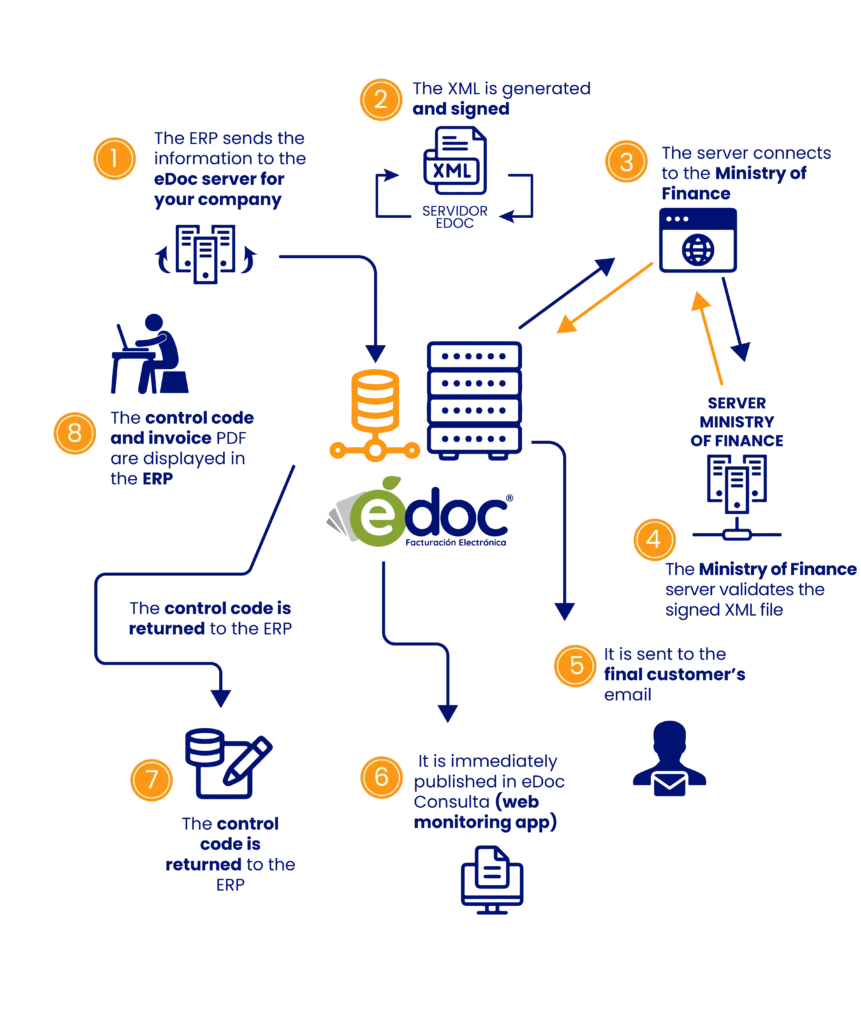
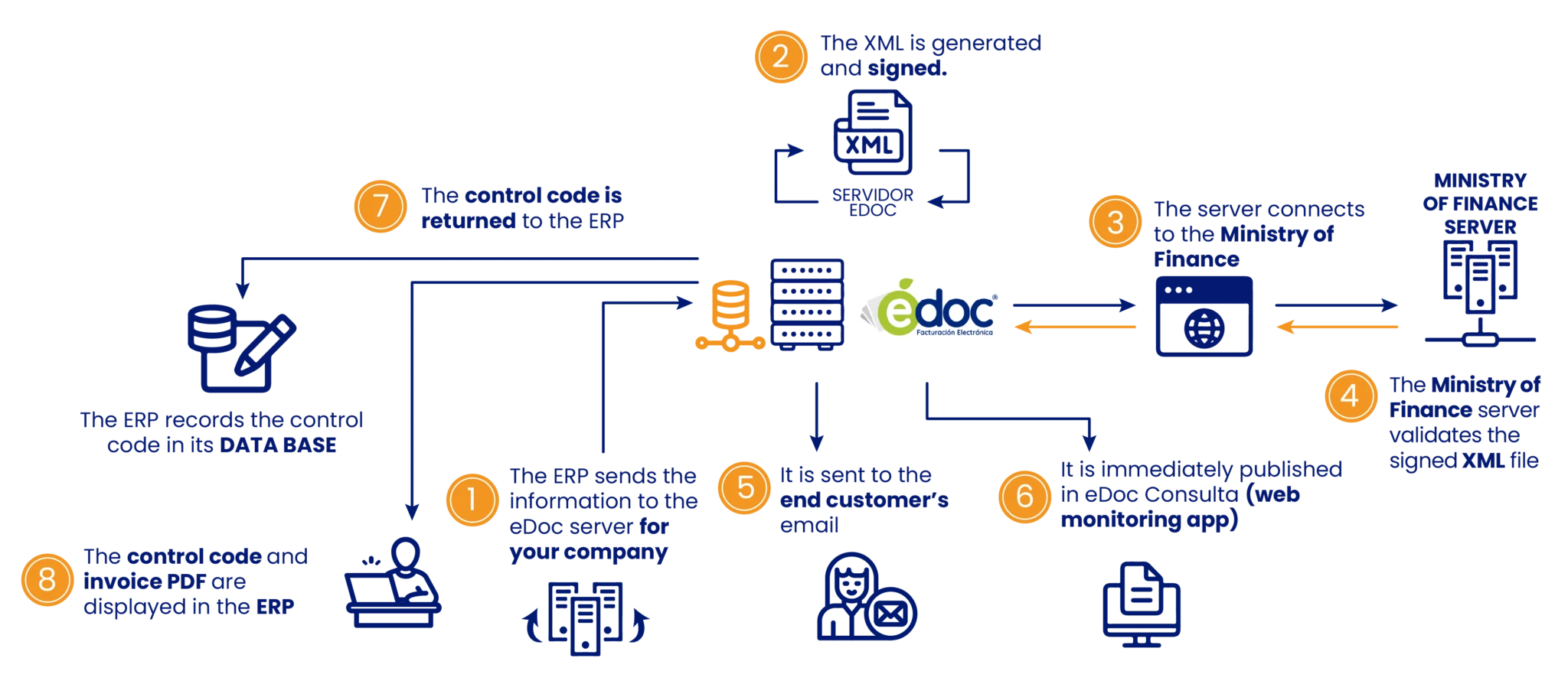
How does the Electronic Invoicing system work?
Types of invoices
Invoice
Debit Note
Credit Note
Electronic Ticket
Export Invoice
Our system is approved under resolution DGT-33-2019, published on June 27, 2019
GuruSoft is one of the actors that contributed to the dissemination of Electronic Invoicing throughout the country, bringing a new way of invoicing and contributing to the growth of companies and entrepreneurs
- Resolution DGT-12-2018 General mandatory requirement for the use of electronic receipts, published in Digital Scope No. 60 to La Gaceta No. 52 on March 20, 2018.
- XML Structures and Annexes Version 4.3 Different XML structures for Electronic Invoicing according to the version.
- Resolution DGT-33-2019 Technical provisions of electronic receipts
- Goods and Services Catalog (Cabys) Mandatory in electronic receipts as of December 1, 2020, as detailed in the document called "Annexes and Structures V 4.3" published on March 22, 2019.
Our Solutions
Integration for
SAP Business One
Our Add-On is an extension for SAP Business One and is certified by SAP. It extends the system’s functionality by adding screens, buttons and validations, allowing you to issue and receive documents without altering your business logic.
The best part? You can complete your processes without leaving the ERP windows
Integration for
SAP R3, ECC, S/4
The native integration with these ERPs allows you to issue and receive electronic documents quickly and efficiently. Our solution includes a connector that sends the information from the ERP to the eDoc server, which is hosted in the cloud.
The server validates the accuracy of the information and then creates the XML file. Once created, the file is signed, assigned a code and sent to the Ministry of Finance for final validation.
Our solution adapts to architecture models with PI/PO interfaces, Gateway models and VPN connections.
Integrations with
other ERPs or invoicing systems
Our Electronic Invoicing solution integrates with any ERP, whether through web services, flat files or databases, ensuring optimal and hassle-free software operation.
Integration with
Point of sale
The integration of this service will allow you to validate and transform all documents issued from your point of sale into an XML file built according to the structure required by the Ministry of Finance. These documents are then sent for the corresponding authorization, automating the process so the user does not have to manually resend each document to the tax authority.
The integration can be carried out directly by mapping data to eDoc Web Services or through an automatic processing service in your ERP or invoicing system.
eDoc Personal
eDoc Personal is an application designed for professionals, small and medium-sized businesses.
This invoicing system provides the tools needed to issue electronic documents in a very practical way.
It improves efficiency by reducing manual intervention and eliminating tasks that do not add value.
It ensures that the information contained in the documents is protected and cannot be altered.
Frequently asked questions
It is a catalog developed by the Central Bank of Costa Rica and the Ministry of Finance for coding the goods and services traded in the country.
It groups goods and services into hierarchical categories and assigns a code to each one. It starts with 10 general categories and expands to more than 20,000 products.
It is available on the website of the Central Bank of Costa Rica, you can find it by clicking here.
All taxpayers who use electronic receipts to invoice the goods and services they sell are subject to its application.
It was mandatorily applied to electronic receipts since December 1, 2020.
It is a voluntary and simple option that allows small taxpayers to comply with their tax duties by simplifying their obligations and accounting.
Registration under this regime is voluntary, so taxpayers who carry out activities included within it can choose between this regime or the traditional regime. If the taxpayer is already registered under the simplified regime, they may request a change to the traditional regime whenever they wish.
- Taxpayer or declarant identification.
- Document type: “Electronic Invoice,” “Electronic Ticket,” “Electronic Credit Note” and “Electronic Debit Note.”
- Consecutive numbering.
- Transaction issue date.
- Sale conditions (credit, cash, consignment, lease with purchase option or any other condition stated on the invoice).
- The documents must be written in spanish and delivered electronically to the buyer. They must also be stored in an indelible electronic format.
- Detail of the merchandise or service provided: quantity sent, unit price, unit of measure, product code, description of the product or service and amount of the operation expressed in national currency.
- Discounts granted, indicating their nature and amounts.
- Subtotal and total invoice value in local currency.
- Every digital invoice must be guaranteed by a digital signature.
Selecciona un país ▼
GuruSoft
Ecuador
Colombia
Bolivia
Panamá
R. Dominicana
Costa Rica
Paraguay
Perú
Guatemala
El Salvador
España
Francia
Angola